| dc.contributor.author | Ethics Eye | |
| dc.date.accessioned | 2026-03-29T15:55:20Z | |
| dc.date.available | 2026-03-29T15:55:20Z | |
| dc.date.issued | 27/09/2024 | |
| dc.identifier.uri | https://archive.veriteresearch.org/handle/456/8133 | |
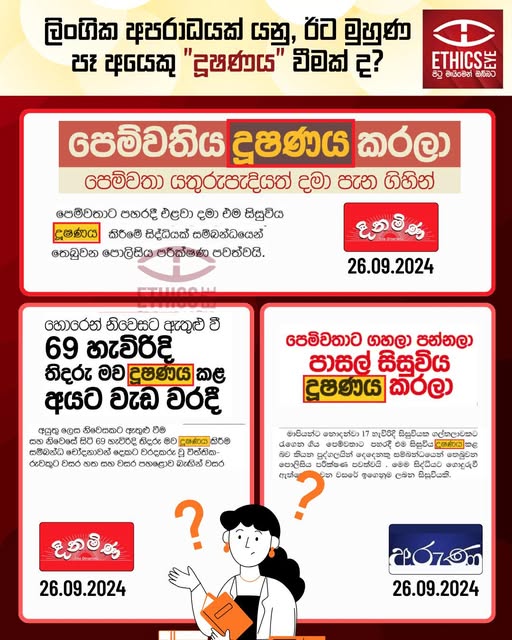
| dc.description | This entry includes an infographic and a write-up in Sinhala. | |
| dc.description.abstract | On 26 September 2024, Dinamina and Aruna newspapers reported two sexual assault incidents using the term "දූෂණය" (dooshanaya) in both headlines and news content, which implies that victims are "polluted". Referring to survivors as dirty or impure in the media increases social stigma. Media is encouraged to use appropriate terms such as "ලිංගික අපයයෝජනය" and to avoid derogatory language. | |
| dc.language.iso | si | |
| dc.publisher | Colombo: Verité Research | |
| dc.relation.ispartofseries | Ethics Eye | |
| dc.subject | Media ethics violation | |
| dc.subject | Unethical reporting - Sexual crimes | |
| dc.subject | Unethical reporting - Publishing derogatory terms | |
| dc.subject | දූෂණය | |
| dc.title | ලිංගික අපරාධයක් යනු ඊට මුහුණ පෑ අයෙකු "දූෂණය" වීමක් ද? | |
| dc.type | Infographic | |
| dc.project.code | Ethics Eye | |